From Shipment to Deployment: How Containers Rewired the Modern Development Pipeline
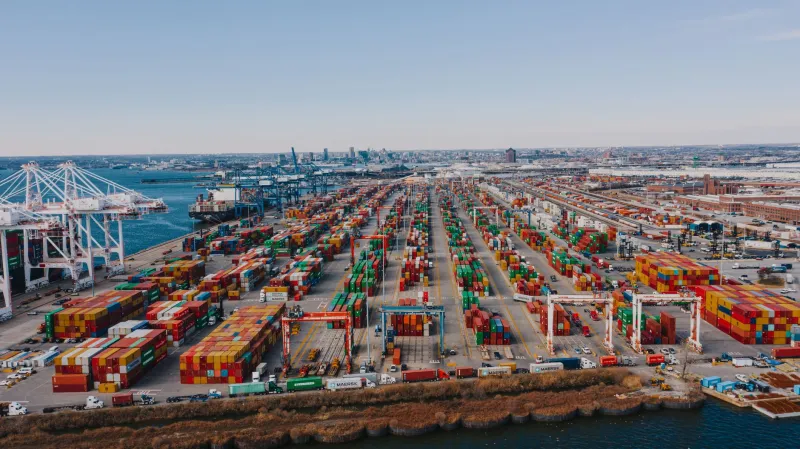
For decades, one of the most persistent frustrations in software development was deceptively simple: code that worked perfectly on a developer's laptop would behave unpredictably once it reached a production server. Environment differences — operating system versions, library dependencies, configuration variables — introduced a fragile layer of uncertainty that slowed teams down and eroded confidence in deployments. Containerization changed that equation entirely.
Docker, introduced publicly in 2013, and Kubernetes, which Google open-sourced in 2014, didn't arrive as incremental improvements to existing workflows. They represented a structural rethinking of how software should be packaged, distributed, and run. Today, containers are the backbone of deployment pipelines across startups, enterprise organizations, and government agencies throughout the United States.
What Containers Actually Are — and Why It Matters
A container is a lightweight, self-contained unit that bundles an application along with everything it needs to run: its runtime environment, libraries, configuration files, and dependencies. Unlike virtual machines, which emulate an entire operating system, containers share the host system's kernel while remaining isolated from one another. This architecture makes them significantly faster to start, smaller in size, and far more efficient in terms of resource consumption.
The practical implication is significant. When a developer builds a containerized application and pushes it through a continuous integration pipeline, the exact same image that was tested in staging is what gets deployed to production. There is no ambiguity about environment state. The container carries its own context with it.
This consistency is what made Docker's adoption so rapid. Teams that had spent years managing dependency conflicts and environment drift suddenly had a mechanism to eliminate those problems structurally rather than procedurally.
Docker: Standardizing the Build Process
Docker's primary contribution was establishing a standardized format for packaging software. The Dockerfile — a plain-text configuration file that specifies how an image should be built — gave teams a declarative, version-controllable way to define their application's environment. This meant infrastructure knowledge could live inside the codebase itself, reviewed and audited like any other piece of software.
For development teams, the workflow shift was meaningful. A new engineer joining a project no longer needed to spend hours configuring a local environment to match what was running in production. Running a single command to pull and start a container was sufficient. Onboarding friction dropped. Environment parity became the default rather than the exception.
Docker Hub and private registries extended this benefit further, enabling organizations to store, version, and distribute container images across teams and geographic locations. A team in New York could build an image and a deployment system in Seattle could pull and run it with complete fidelity.
Kubernetes: Orchestrating at Scale
Docker solved the packaging problem. Kubernetes solved the operational problem that followed: what happens when you need to run hundreds or thousands of containers across a distributed cluster of servers?
Kubernetes, commonly abbreviated as K8s, is an orchestration platform that automates the deployment, scaling, and management of containerized applications. It handles decisions that would otherwise require significant manual intervention — determining which server has capacity to run a new container, restarting failed instances automatically, distributing traffic across healthy replicas, and rolling out updates without downtime.
For production systems, these capabilities translate into measurable operational advantages. A retail platform handling elevated traffic during peak shopping periods can instruct Kubernetes to scale a specific service horizontally in response to demand, then scale it back down when traffic normalizes. This elasticity was previously achievable only through complex scripting or expensive proprietary platforms.
Kubernetes also introduced a declarative model for infrastructure management. Teams describe the desired state of their system — how many replicas of a service should run, what resources each container is allocated, how services should communicate — and Kubernetes continuously works to reconcile actual system state with that declared intent. This approach reduces configuration drift and makes infrastructure changes auditable and reproducible.
The Impact on Time-to-Market
The business case for containerization extends well beyond technical elegance. Deployment velocity is a competitive advantage, and containers have demonstrably accelerated it for organizations that adopt them thoughtfully.
Consider a software team releasing updates to a customer-facing application. In a pre-container environment, deploying a new version might involve coordinating server configurations, managing dependency installations, and running through a manual verification checklist before traffic could be safely routed to the new version. Each step introduced delay and risk.
With a mature container-based pipeline, the same deployment might involve pushing code to a repository, triggering an automated build that produces a new container image, running that image through an automated test suite, and deploying it to production through a Kubernetes rolling update — all without manual intervention. The entire process can complete in minutes rather than hours.
This compression of the deployment cycle allows teams to ship smaller, more frequent changes, which in turn reduces the risk associated with each individual release. The feedback loop between writing code and observing it in production tightens considerably.
Challenges Worth Acknowledging
Adopting containers and Kubernetes is not without complexity. The learning curve for Kubernetes in particular is steep. Teams new to the platform often underestimate the operational knowledge required to configure networking, manage persistent storage, implement security policies, and monitor cluster health effectively.
Managed Kubernetes services — Amazon EKS, Google GKE, and Azure AKS among them — have lowered that barrier meaningfully by abstracting much of the control plane management. However, teams still need personnel with sufficient expertise to configure workloads correctly and respond to operational incidents.
Security is another area requiring deliberate attention. Container images must be scanned for known vulnerabilities, network policies must restrict unnecessary communication between services, and access controls must be enforced at the cluster level. None of these concerns are insurmountable, but they require proactive investment.
Where the Ecosystem Is Heading
The container ecosystem continues to mature. The emergence of WebAssembly as a portable execution format has prompted conversations about whether even lighter-weight alternatives to containers may eventually find a place in certain deployment contexts. Service mesh technologies like Istio and Linkerd have added sophisticated traffic management and observability capabilities to Kubernetes environments.
At the same time, the fundamentals established by Docker and Kubernetes — portable packaging, declarative configuration, automated orchestration — have become so deeply embedded in how the industry operates that they function less like innovations and more like infrastructure assumptions. They are the foundation on which newer tooling is built.
For development teams evaluating their deployment architecture, understanding containers is no longer optional. It is a prerequisite for building systems that can scale, adapt, and compete in an environment where the speed and reliability of software delivery are directly tied to business outcomes.
The container revolution didn't just change how code gets deployed. It changed what teams expect deployment to feel like — and that expectation is now the baseline.