The Last COBOL Programmers: Inside America's Quiet Race Against Retirement
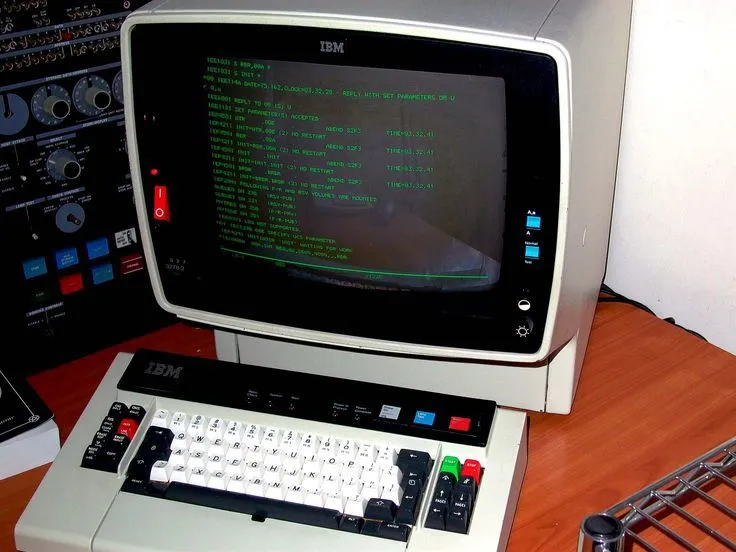
Photo: vintage mainframe computer terminal programmer, via i.pinimg.com
Somewhere in a federal data center in Maryland, a mainframe is processing millions of transactions today using logic written in 1962. The engineers who wrote it are gone. The engineers who maintain it are, on average, in their late fifties. And the organizations depending on that code—your bank included—are only now beginning to understand what they stand to lose.
The Systems That Won't Retire
Estimates suggest that between 200 and 800 billion lines of COBOL remain in production worldwide, with a heavy concentration in American financial services, insurance, and government agencies. Roughly 95% of ATM transactions touch a COBOL system at some point. During the pandemic, New Jersey's unemployment insurance system famously put out a public call for COBOL volunteers when claims surged past what the aging infrastructure could handle.
The uncomfortable truth is that these systems have endured not because organizations love them, but because they work. A batch job that has run every night for forty years without incident represents a level of reliability that modern engineering often aspires to and rarely achieves.
Why the Premium Rates Are Justified
When agencies and banks contract COBOL specialists at rates that would seem absurd for an 'obsolete' language, they are not paying for syntax. They are paying for context.
A veteran maintainer knows why a particular field is six characters long. They know which downstream system breaks if a transaction posts on a Sunday. They carry four decades of unspoken business logic that exists nowhere in documentation—because when the documentation was written, everyone assumed the system would be replaced within five years. It never was.
This is the crisis: the knowledge was never captured because replacement always felt imminent. Now retirement is imminent instead.
What Knowledge Transfer Actually Requires
Organizations making real progress on this problem share a few practices:
- Pairing, not handoffs. A two-week documentation sprint captures almost nothing. Six months of a junior engineer sitting beside a veteran maintainer captures the reasoning behind the code.
- Instrumenting legacy systems. Adding modern observability to mainframe jobs creates a behavioral record that survives personnel changes.
- Hiring for longevity, not novelty. The engineers best suited to this work are often those who find satisfaction in stability rather than churn—a profile the industry has long undervalued.
Lessons for the Modern Stack
There is an irony here worth sitting with. The engineers maintaining these systems practice disciplines the industry keeps reinventing under new names: change control, backward compatibility, boring technology. They deploy rarely and carefully. Their systems fail almost never.
The next generation of critical infrastructure will be written in TypeScript and Go, running on platforms that didn't exist a decade ago. Whether any of it lasts forty years depends less on the language than on the mindset—one that treats reliability as the feature, and treats the engineers who understand the system as irreplaceable. Because they are.